
Reading Shirt Fit From the Pockets
FIT
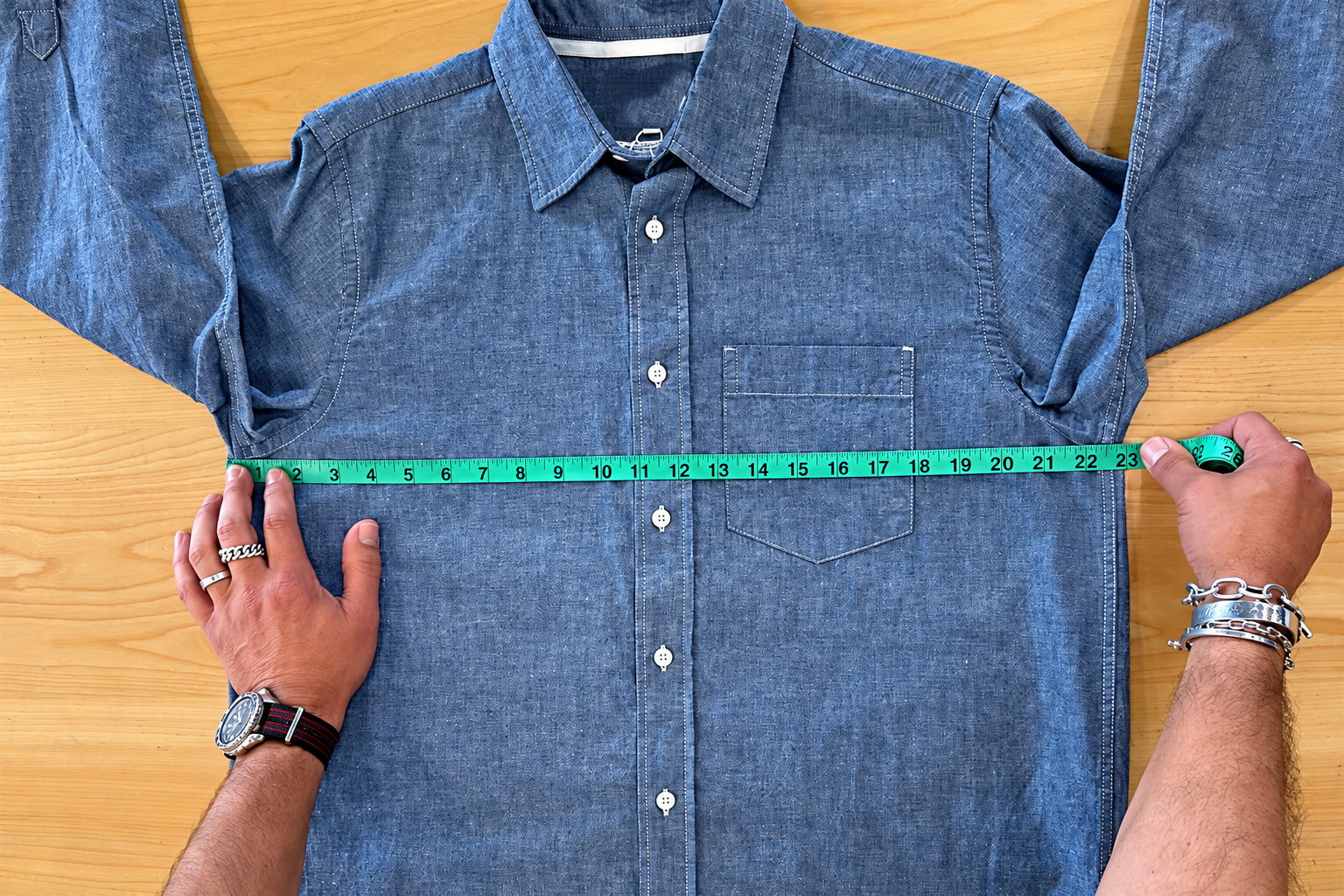
Flat flaps and pockets sitting square on the chest are the first sign the size is right.
Most fit advice tells you to look at the shoulder seam and the sleeve. Both matter. But on a shirt with chest pockets, the pockets themselves tell you most of what is wrong before you reach for a tape measure. They sit on the part of the shirt that moves the most, and they are the first thing to pull, lift or sag when the size is off.
Pockets Pulling Apart: Too Tight in the Chest
Stand in front of a mirror and relax your arms. If the two pockets on an overshirt look further apart than they do on the listing photo, or the pocket on a flannel is stretched wider than it is tall, the chest is pulling. You will also see the placket between the buttons gap into small ovals. Go up a size, or if the shoulders fit, accept that this is a shirt to wear open.
Flaps Lifting: Too Much Fabric
When a shirt is too big, the extra cloth folds under its own weight and the pocket flaps lift at the corners instead of lying flat. Put a card wallet in the pocket and bend forward as if tying a shoe. If the flap stands up or the wallet shifts toward the opening, the chest is roomier than it needs to be and the shirt will look slept in by lunch.
Pocket Height: Where Your Hand Lands
Drop your arm and bring your hand up to your chest without looking. Your fingers should land on the pocket opening, not above or below it. A pocket that sits too high means the shirt is cut for a longer torso than yours and the hem will run long. A pocket that sits low means the opposite, and the hem will ride up when you lift your arms.
The Cuff and the Watch
With the arm hanging straight, the cuff should end at the wrist bone. Bend the arm and it should move no more than an inch up the forearm. If you wear a watch, button the cuff over it: the overshirt cuff should clear it and the flannel cuff should just cover it. A cuff that catches on the watch every time you reach is a sleeve cut too slim, and no amount of length will fix it.
The Hem and the Back Pocket
An overshirt hem should cover the back pockets of your jeans when you stand, and still cover them when you reach forward with both arms. A flannel hem can be shorter, since it is usually worn under something or tucked. Reach up with both hands and watch the hem in the mirror; if it clears your belt, the body is too short for your torso regardless of what the chest is doing.
Between Two Sizes
For the overshirt, take the larger size when it will go over a flannel and the smaller when it will go over a tee. For the flannel, take the size whose pocket sits where your hand lands, since a flannel that is a little loose in the body is fine under an overshirt and a flannel whose pocket is in the wrong place never looks right.
Every listing states flat measurements for the chest, body length, sleeve and pocket depth, taken from the garment itself. Measure a shirt you already own, compare the numbers, and if the parcel still arrives wrong, our Return & Refund Policy covers sending it back at no cost to you.
Thank you for shopping with us, and for leaving the house with your hands free.